Types of Restoration Services We Provide
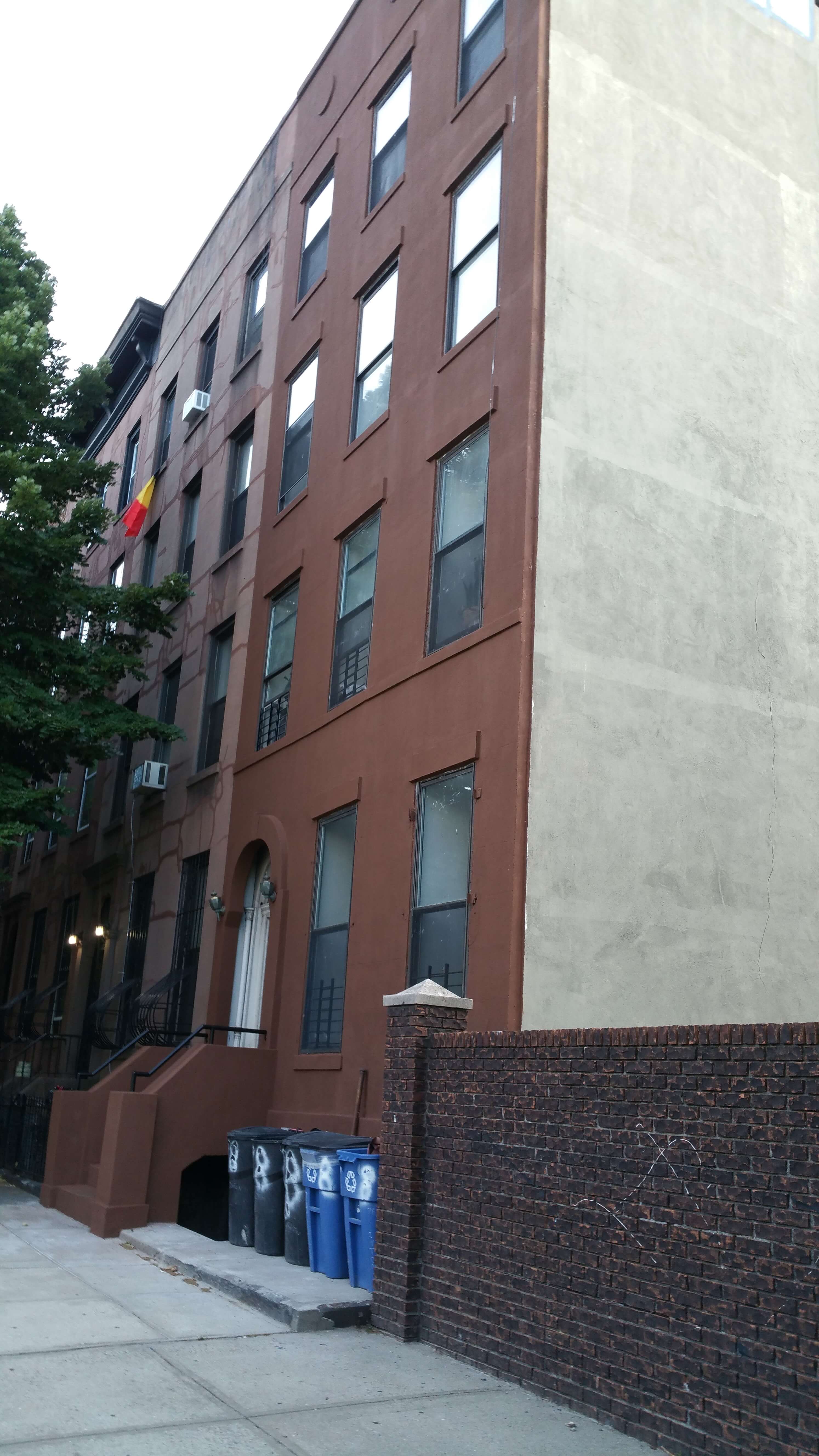
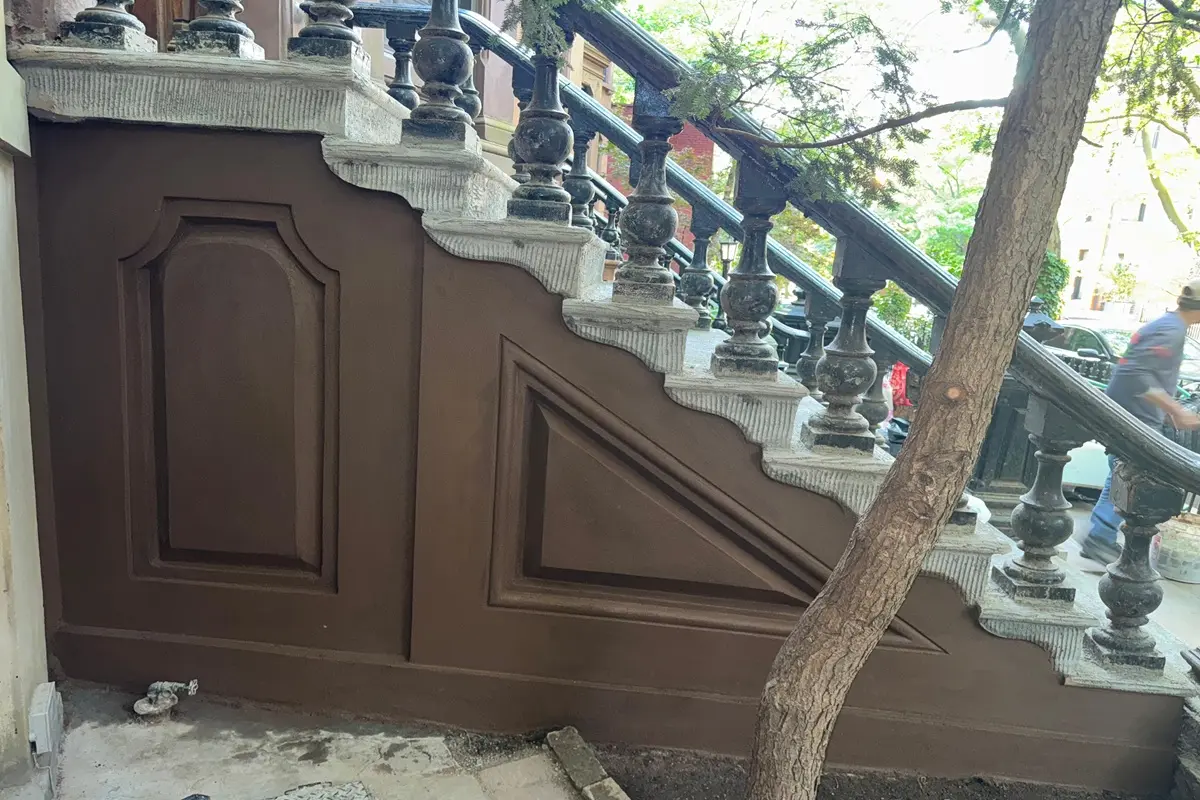
Brownstone Facade Restoration & Resurfacing
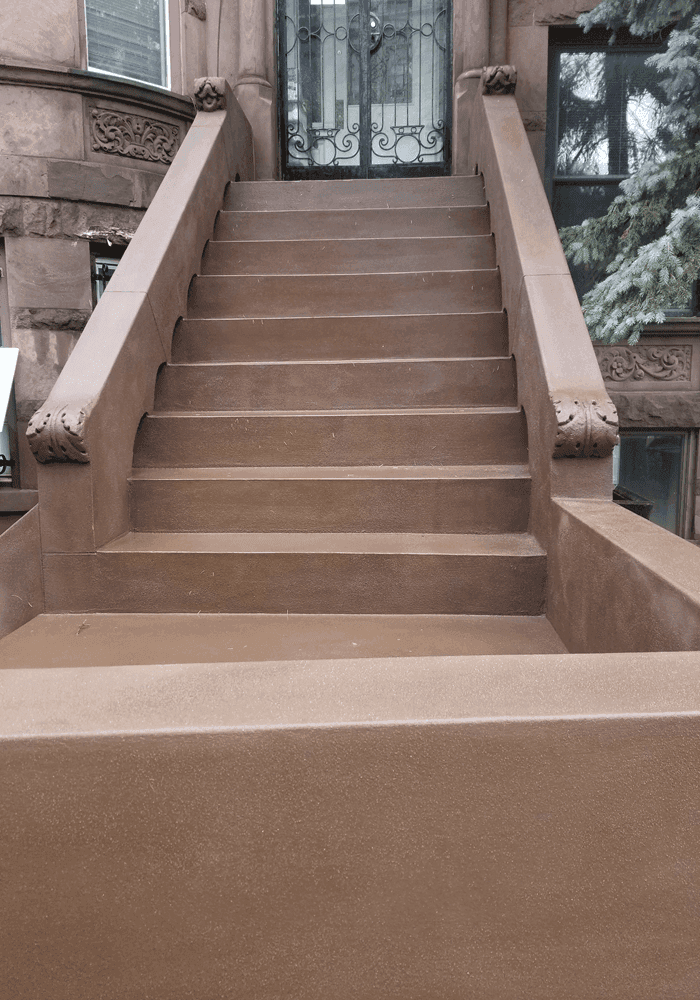
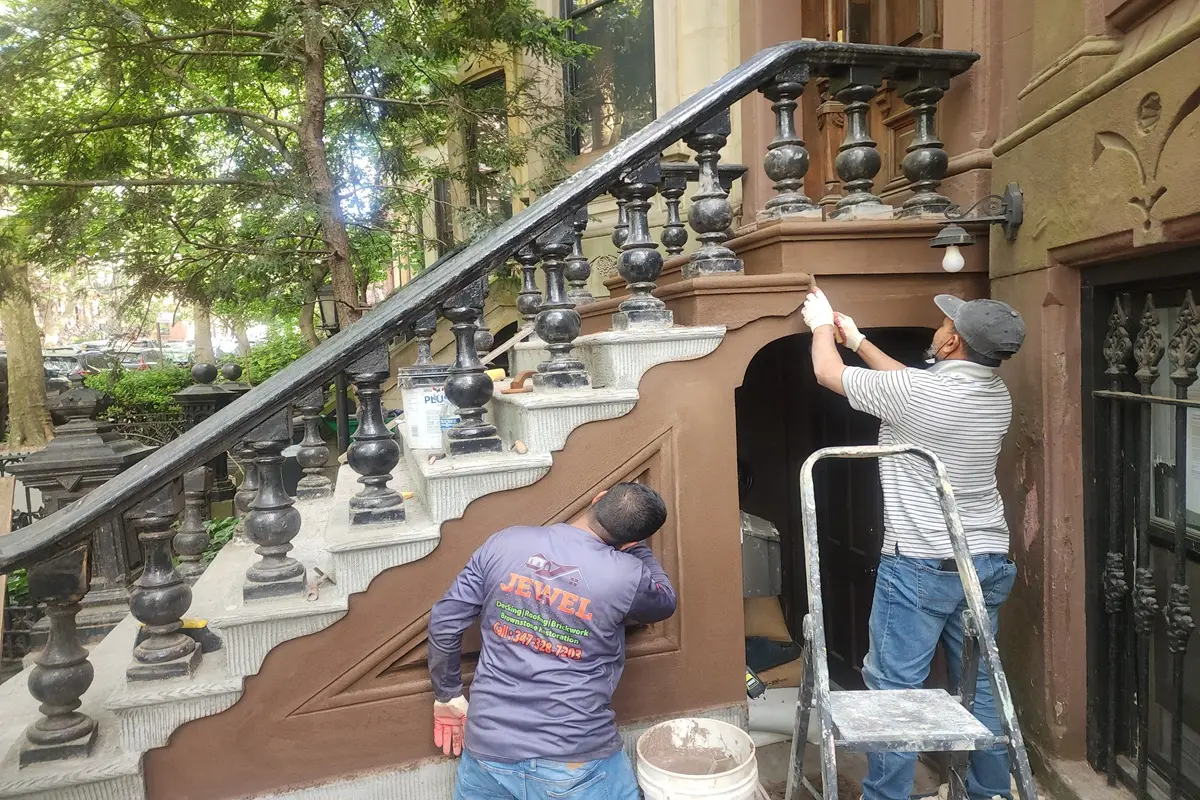
Our facade restoration services revive the original appearance of your brownstone using color-matched, historically compatible materials. This includes removing deteriorated stone layers, applying high-quality concrete bonding/slurry coating, then applying stucco scratch coating, applying final brownstone color matched cement mix coating, and sealing the surface with waterproofing treatments to prevent future moisture damage. All work complies with NYC Landmarks Preservation Commission (LPC) guidelines.
Limestone Courtyard Installation & Restoration
Limestone brings a refined, natural elegance to any courtyard setting. We source and install quality limestone pavers tailored to your space — carefully set and finished to enhance your property's character while delivering long-term durability.
Concrete & Paver Courtyard Installation & Restoration
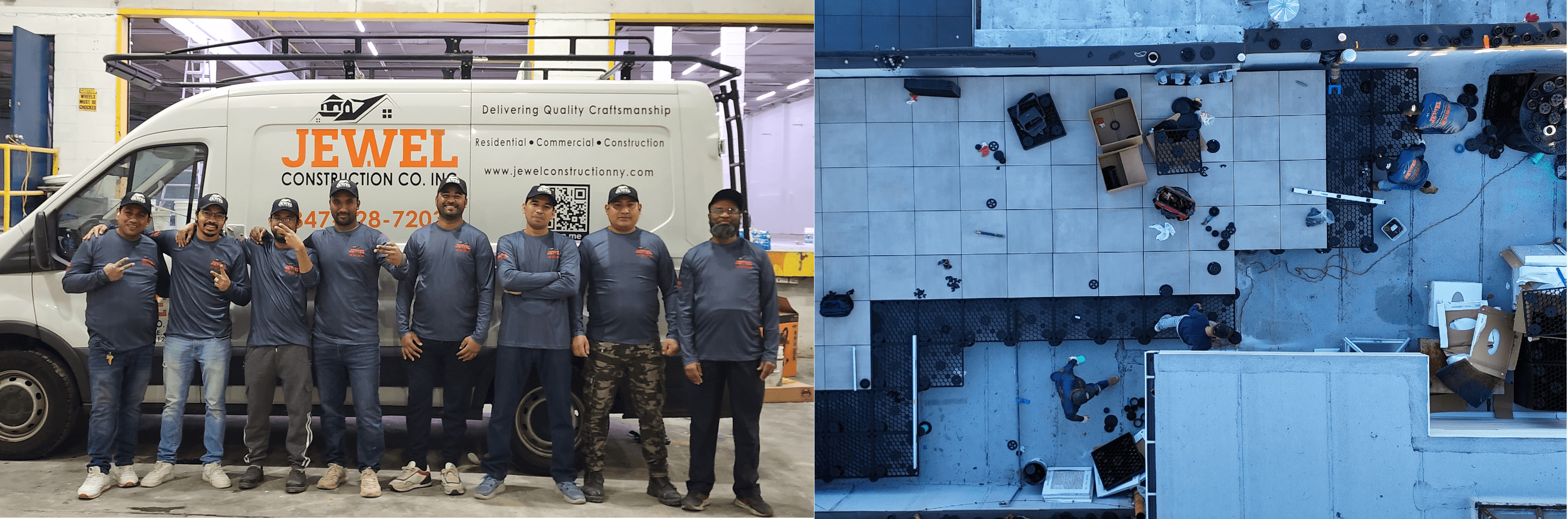
For a clean, modern aesthetic, our concrete and paver courtyard solutions offer exceptional strength and versatility. From stamped and brushed concrete finishes to full slab restorations, we also install and restore a wide range of paver systems — including brick, porcelain, and concrete pavers — tailored to complement your property's style. Every project is executed with precision and built to withstand heavy use and New York's demanding climate.
Benefits of Brownstone Restoration
Preserved Historic Character:
Restore original architectural details while maintaining the timeless charm and authenticity of your brownstone.
Increased Property Value:
Professional restoration improves curb appeal, structural integrity, and long-term resale value in competitive NYC markets.
Improved Structural Durability
Repairing masonry, stoops, facades, and cornice protects your home from weather damage, moisture intrusion, and long-term deterioration.
LPC Compliance & Permit Support:
Ensure your project meets Landmarks Preservation Commission requirements and NYC building codes for a smooth approval process.
Enhanced Waterproofing & Energy Efficiency:
Upgraded roofing, sealing, and masonry minimizes major structural issues, reduce leaks, and costly future repairs.
Brownstone Restoration Investment
Minor Brownstone Repair (Patching & Tinting):
Starting at $15,000 – $25,000.
Best for localized spalling or "spot" repairs to prevent further water damage.
Full Facade Restoration (Landmark Standard):
Starting at $65,000 – $120,000+.
Includes a full strip-down, structural masonry repair, and hand-tooled artisan finishing to match historic LPC requirements.
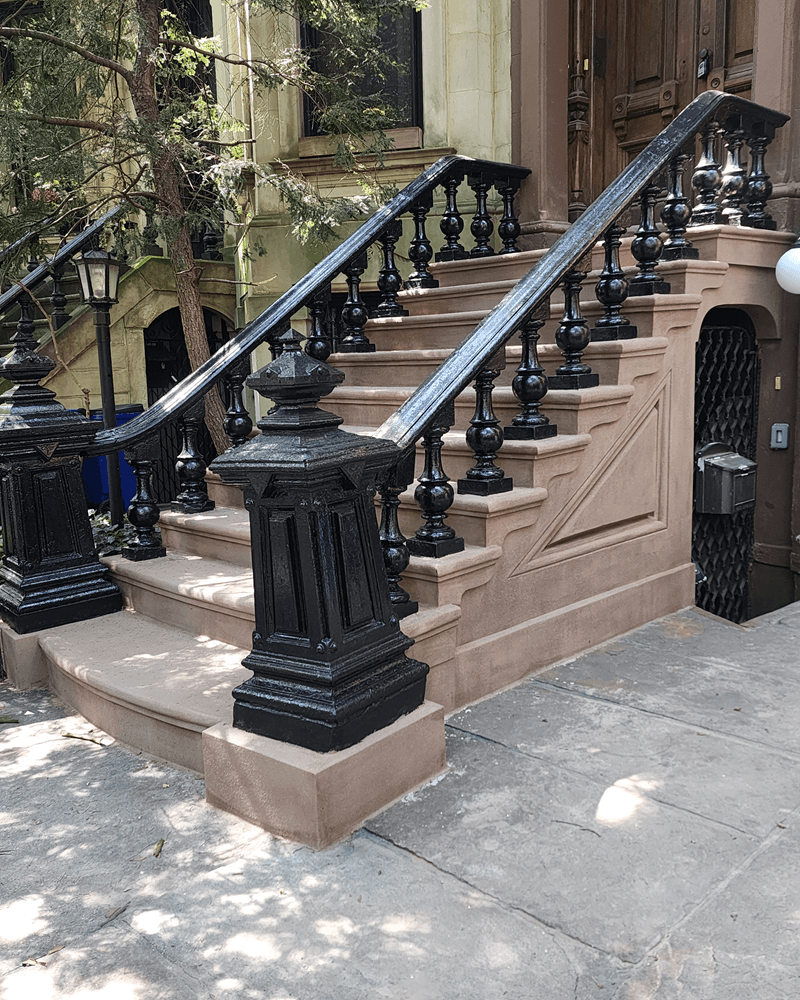
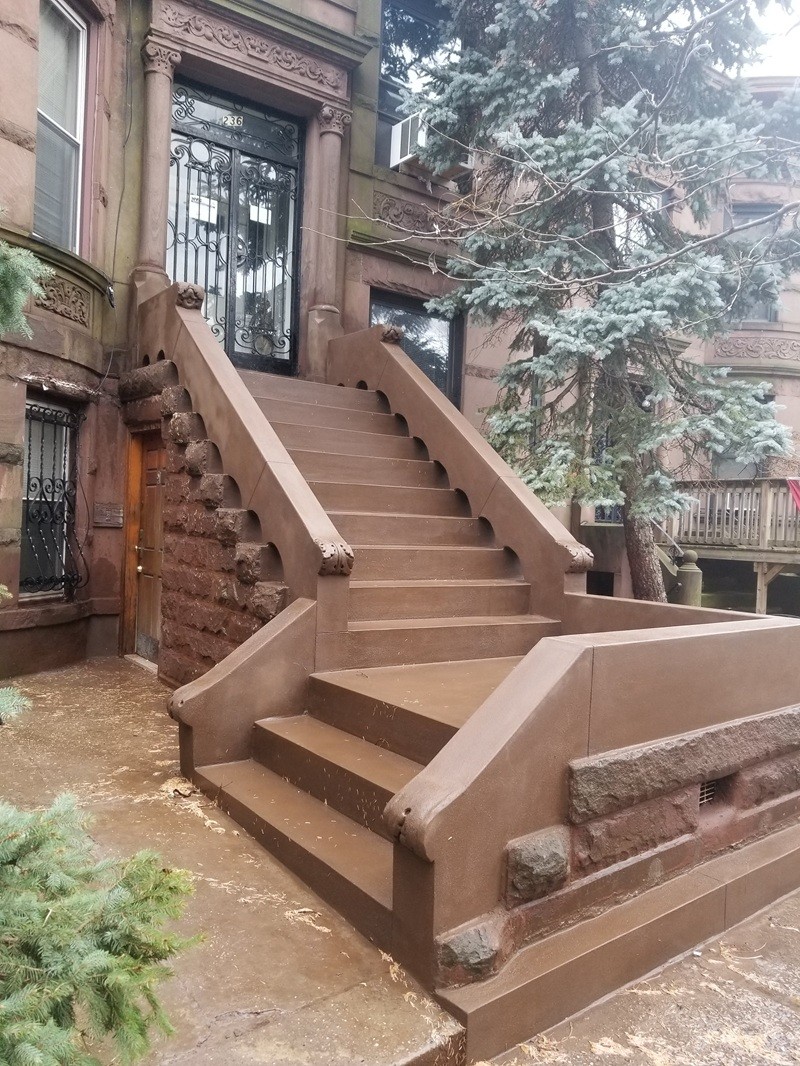
Stoop Restoration:
Typically ranges from $25,000 – $45,000
Depending on the complexity of the carvings and new ironwork.
Brick Repointing & Mortar Joint Restoration
Starting at $18,000 – $40,000
Depending on the number of stories and linear footage of deteriorated joints. Includes full removal of cracked or crumbling mortar, custom-matched historic mortar mix application, and a final waterproof sealant coat.
What Influences the Cost?
Building Size & Story Height:
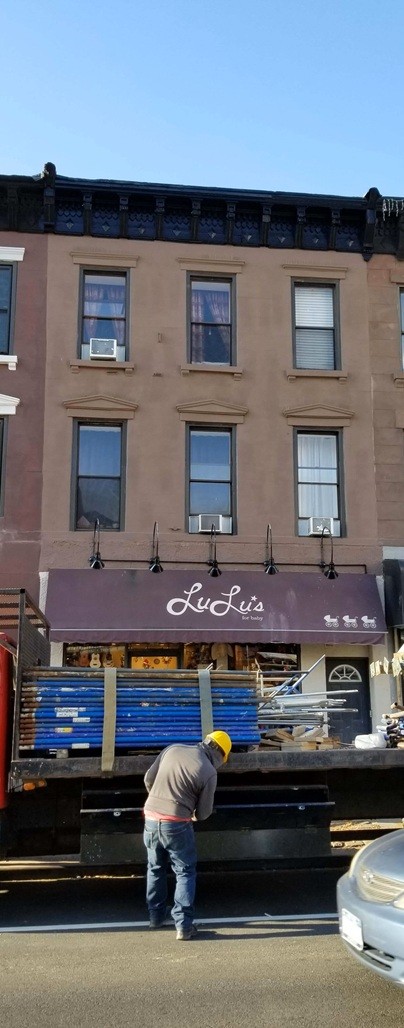
The larger and taller the building, the more materials, labor, and scaffolding are required. A multi-story Brooklyn brownstone or Manhattan townhouse will naturally carry a higher cost than a single-story structure, as upper-story access requires specialized rigging, safety equipment, and additional crew hours to complete the work safely and efficiently.
Extent of Deterioration & Damage:
For historic properties, approvals from the New York City Landmarks Preservation Commission (LPC) and filings with the New York City Department of Buildings (DOB) may be required. Architectural drawings, engineering reports, and filing fees can add $5,000 – $10,000, but ensure legal compliance and protect long-term property value.
Landmark Preservation Commission (LPC) Requirements:
Properties located within NYC's historic districts or individually landmarked buildings must meet strict LPC guidelines, requiring the use of specific materials, hand-tooled artisan finishing techniques, and a more meticulous approval process. This level of compliance adds time, expertise, and cost compared to non-landmarked properties where material choices are more flexible.